
Sewer Line Replacement
Expert Sewer Line Replacement in Seattle, King & Pierce Counties
A collapsed sewer line is a homeowner’s worst nightmare. Buried deep underground, your main sewer line handles all the wastewater leaving your home. When it completely fails due to age, shifting soil, or aggressive tree roots, the result is raw sewage backing up into your ground-floor bathrooms and a flooded, hazardous yard.
Grindstone Guys provides full-scale sewer line replacement services across Seattle, King County, and Pierce County. We safely remove failing, decades-old pipes and install modern, durable systems that will protect your property for generations.
Signs Your Sewer Line Requires a Full Replacement
Because the pipe is buried, problems often develop silently for years. In the wet Pacific Northwest, it is crucial to recognize these warning signs before a total failure occurs:
- Multiple Fixtures Backing Up
If you flush the toilet and water bubbles up in the shower or bathroom sink, the main line exiting your home is completely blocked or collapsed. - Soggy, Foul-Smelling Lawn
A broken sewer line leaks nutrient-rich (and hazardous) wastewater directly into the soil. If you notice unusually green patches of grass, sinkholes, or a persistent sewage odor in your yard, the pipe has ruptured. - Foundation Cracks or Settling
Continuous leaking under your home’s foundation can wash away the supporting soil, leading to structural cracks in your basement walls or concrete slab. - Severe Root Intrusions
If you have to call a plumber every few months to hydro-jet tree roots out of your line, the pipe is heavily cracked. Roots seek out the moisture and warmth of the sewer, eventually crushing the pipe entirely.
Our Sewer Line Replacement Process
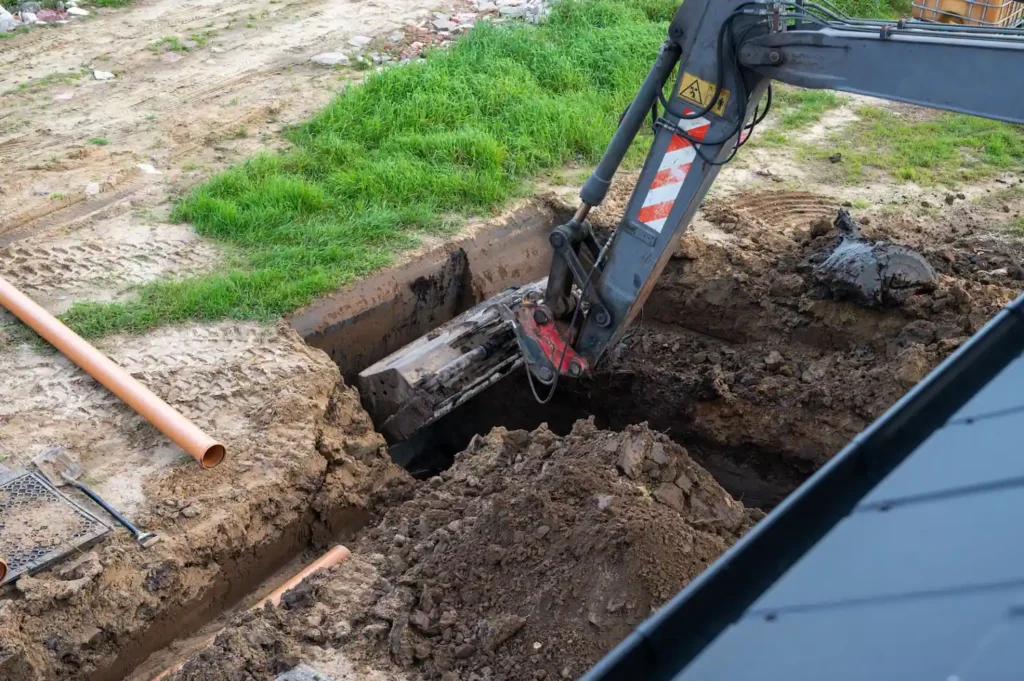
Replacing a sewer line is a major excavation project that requires heavy machinery and precise engineering. We handle everything from the initial diagnosis to the final municipal inspection, offering both traditional and trenchless replacement methods depending on your property’s needs.
Step 1: HD Camera Diagnosis
We never dig blindly. We send a high-resolution camera down the line to pinpoint the exact location and severity of the collapse to confirm a replacement is mandatory.Step 2: Method Selection
Traditional Open-Trench: Required if the old pipe has completely lost its structural integrity or has a severe “belly” (sag) that must be re-graded to ensure proper gravity flow.
Trenchless Pipe Bursting: If the pipe maintains its general slope, we can use a hydraulic bursting head to shatter the old pipe underground while pulling a brand-new, seamless pipe into its place, saving your landscaping.
Step 3: Safe Excavation & Installation
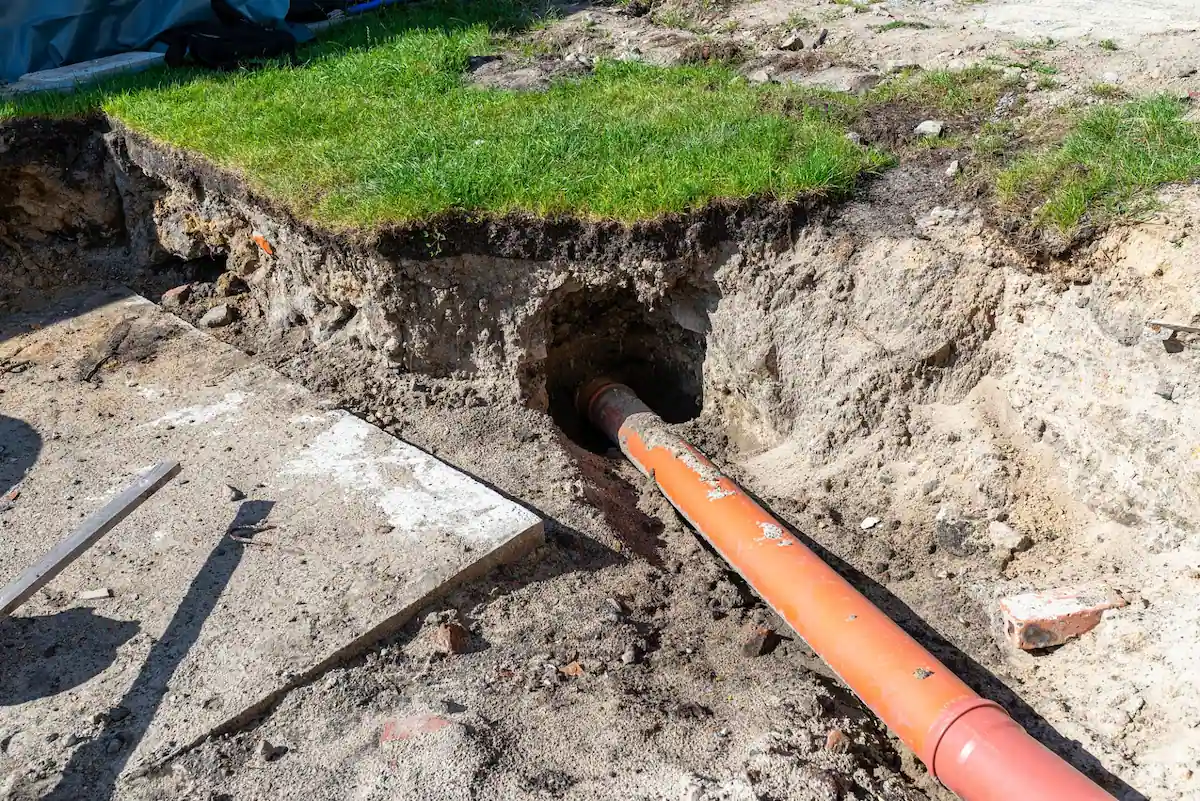
For traditional replacements, we locate all underground utilities before carefully trenching the yard. We remove the old pipe and install high-grade PVC or HDPE pipe, ensuring the exact slope required by Washington State plumbing codes.Step 4: Backfilling & Inspection
Once the new line passes the rigorous King or Pierce County municipal inspection, we carefully backfill the trench and compact the soil.
Historic Pipe Materials in the Pacific Northwest
Many historic homes in Seattle and Tacoma are sitting on ticking time bombs. If your home was built before 1980, you likely have one of these outdated materials buried in your yard that will eventually require replacement:
| Pipe Material | Common Era Used | Failure Risk | Our Solution |
| Orangeburg (Tar Paper) | 1940s – 1970s | Extremely High. Made of wood pulp and hot pitch. It absorbs water, flattens into an oval, and disintegrates. | Full trench excavation and replacement. |
| Clay / Terra Cotta | Pre-1950s | High. Highly susceptible to cracking from ground shifts and massive tree root invasions at the joints. | Trenchless lining (if structurally sound) or full replacement. |
| Cast Iron | Pre-1980s | Moderate. Rusts and scales from the inside out, eventually channeling at the bottom until the floor of the pipe falls out. | Descaling (if caught early) or full replacement. |
| PVC / HDPE | Modern | Low. Smooth, highly durable, and impenetrable to tree roots when properly sealed. | The standard material we use for all new installations. |
Why Choose Grindstone Guys for Major Excavation?
Replacing a sewer line is heavy construction. It requires specialized liability insurance, heavy equipment operation, and a deep understanding of municipal right-of-way codes. Grindstone Guys manages the entire complex process. We pull the necessary permits, coordinate with city inspectors, and execute the replacement safely. We provide transparent, flat-rate bids so you know the exact cost of the project before we break ground.
Frequently Asked Questions
Does my homeowners insurance cover a full sewer line replacement?
In most cases, standard homeowners insurance does not cover the cost of replacing the underground pipe itself, as it is considered standard wear and tear. However, some policies may cover the cleanup and water damage caused by the backup inside your home. We highly recommend checking your policy for a specific "sewer backup endorsement."
What is Orangeburg pipe, and why must it be replaced?
Orangeburg pipe was heavily used during the post-WWII housing boom in Seattle and Tacoma due to cast iron shortages. It is essentially compressed wood pulp (paper) sealed with coal tar. Over decades of ground moisture, the layers delaminate, the pipe absorbs water, and the weight of the dirt crushes it flat. It cannot be repaired or snaked; it must be fully replaced.
How long does a traditional sewer line replacement take?
While every property is different, a standard residential open-trench sewer replacement in King or Pierce County typically takes our crew 2 to 4 days from initial excavation to final backfill, depending on the depth of the pipe, soil conditions, and the length of the run to the city main.
Who is responsible for the sewer line under the street?
In almost all local municipalities, the homeowner is responsible for the entire length of the side sewer line from the house all the way to the connection point at the city's main sewer line—even the section that runs under the public sidewalk or street.
Will replacing my sewer line destroy my landscaping?
Traditional open-trench excavation does require digging a trench through your yard to access the pipe. We are highly strategic about where we dig and how we pile the dirt to minimize the footprint, but you will need to reseed the grass or repair hardscaping over the trench line once the soil settles. If your property qualifies, we can use trenchless pipe bursting to preserve your lawn.
What is the difference between trenchless pipe bursting and traditional open-trench replacement?
Traditional open-trench requires digging a ditch the entire length of the pipe. Trenchless pipe bursting requires only two small access pits (one at the house, one at the street). A hydraulic machine pulls a bursting head through the old pipe, shattering it outward, while simultaneously dragging a brand-new, seamless HDPE pipe into its exact place.
Can tree roots break a brand-new PVC or HDPE sewer line?
No. Modern PVC and HDPE sewer pipes are manufactured with completely watertight, glued, or fused joints. Unlike old clay pipes that had porous mortar joints, modern pipes do not leak the moisture or vapor that attracts tree roots, making them virtually root-proof and incredibly long-lasting.