
Commercial Grease Line Maintenance
Commercial Grease Line Maintenance in Seattle, King & Pierce Counties
For a commercial kitchen, a grease line backup is a fast track to a forced closure. Restaurants, cafeterias, and food processing facilities produce a massive volume of fats, oils, and grease (FOG). In the cold underground pipes of the Pacific Northwest, this grease solidifies rapidly, clinging to pipe walls and catching food debris until the line completely chokes.
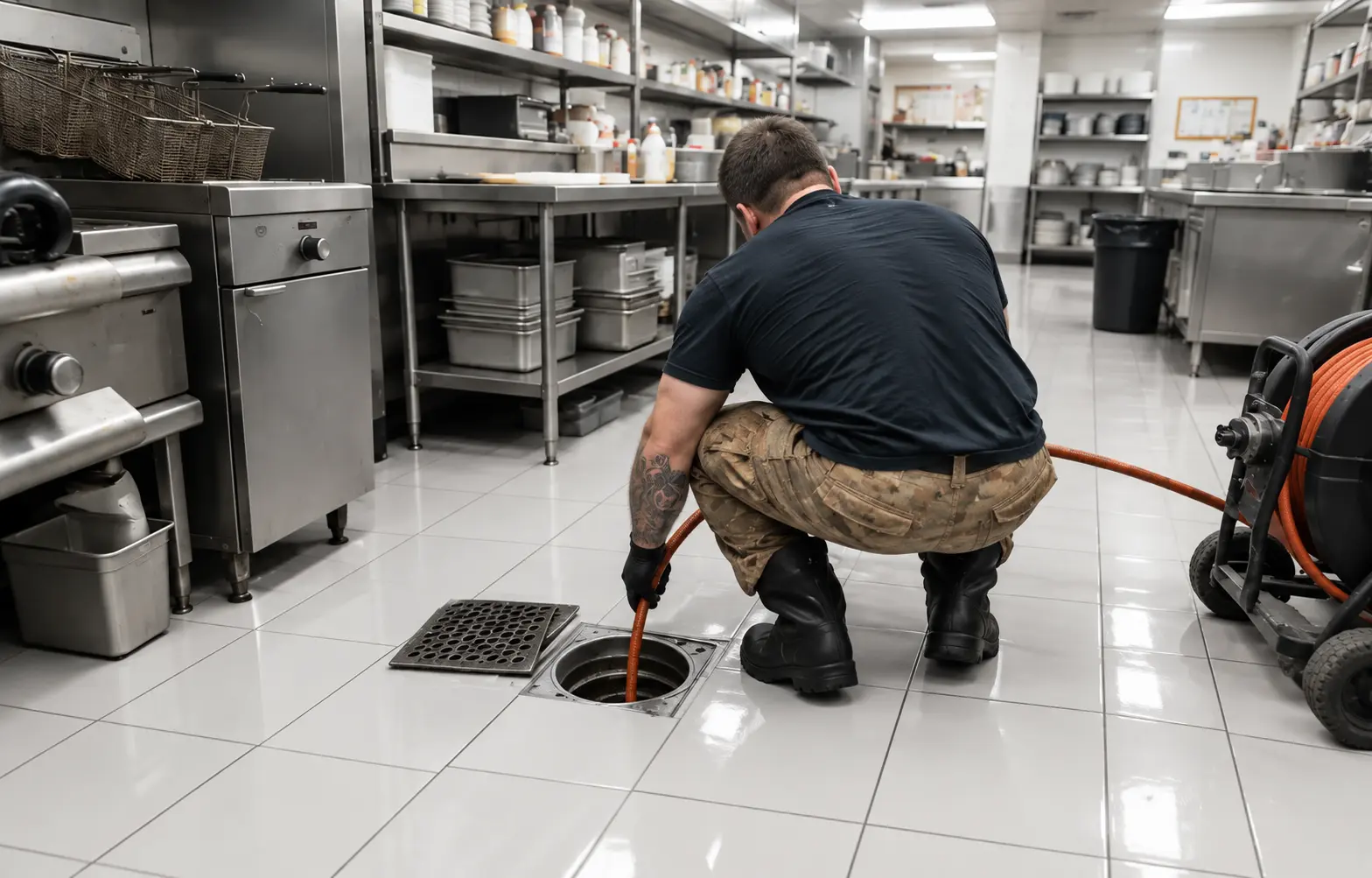
Grindstone Guys provides preventative grease line maintenance and emergency hydro jetting services for commercial kitchens across Seattle, King County, and Pierce County, keeping your drains clear and your doors open.
Why Standard Snaking Doesn't Work for Grease
When a grease line backs up, many business owners attempt to snake the drain or pour chemical solvents down the sink. These are temporary, often damaging, band-aids.
A mechanical snake will only punch a small hole through a hardened grease blockage, allowing water to flow temporarily before the sticky walls catch new debris and clog again within days. Harsh chemicals can degrade commercial plumbing infrastructure and violate local wastewater regulations.
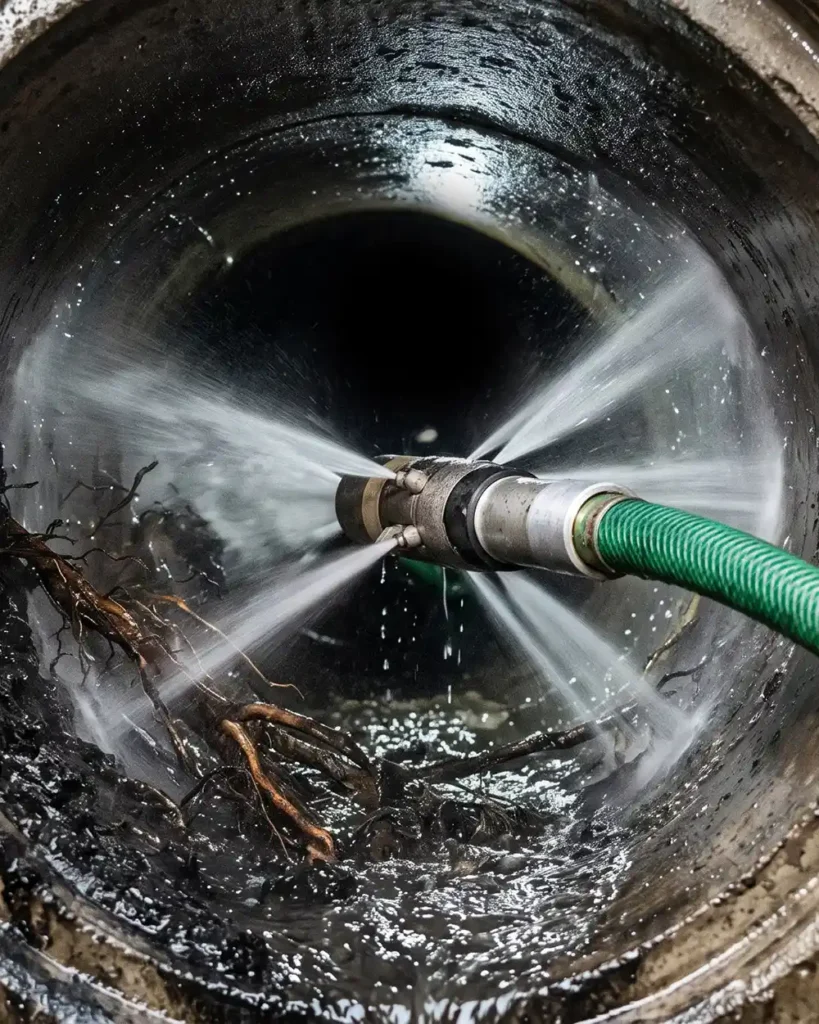
The Solution: The only effective way to clear a grease line is with Commercial Hydro Jetting. We use high-pressure (up to 4,000 PSI), often hot-water jetting, to literally melt, emulsify, and blast the solidified grease completely off the pipe walls, flushing it safely into the city sewer or your grease interceptor.
Signs Your Grease Lines Need Immediate Attention
Don’t wait for a flood during a Friday night dinner rush. Call our commercial plumbing specialists if your kitchen staff reports:
- Slow-Draining Floor Sinks
If water pools around the drain covers under your prep tables or dishwashers, a blockage is actively forming downstream. - Foul Odors in the Dining Room
The smell of rotting grease escaping from floor drains is a massive red flag for customers and health inspectors alike. - Gurgling from Multiple Drains
When air is trapped by a grease blockage, you will hear a gurgling sound coming from one drain when water is poured down another. - Grease Trap Overflows
If your grease interceptor is backing up into the kitchen, the outgoing line is completely blocked.
Preventative Maintenance: Your Best Defense
A reactive approach to grease lines is costly. Emergency plumbing bills, lost revenue from a closed kitchen, and potential fines from the King County or Pierce County health departments can devastate a restaurant’s bottom line.
We partner with commercial kitchens to create Custom Preventative Maintenance Plans:
Quarterly or Bi-Annual Hydro Jetting
Camera Inspections
Priority Emergency Dispatch
The True Cost of FOG (Fats, Oils, and Grease) Compliance
Local municipalities in Western Washington strictly enforce FOG regulations to protect the public sewer infrastructure. If your grease lines are not properly maintained, excess grease will bypass your trap and enter the city sewer.
| The Risk | The Consequence | How Grindstone Guys Protects You |
| Health Department Violations | Fines, forced temporary closures, and a negative mark on public health records. | Routine jetting ensures drains flow perfectly, eliminating standing water and foul odors. |
| Wastewater Surcharges | Local utility districts impose massive fines if they trace excessive grease in the city sewer back to your facility. | Deep cleaning of the lines leading to and from your grease interceptor ensures it functions properly. |
| Catastrophic Backups | Raw sewage and grease flooding the kitchen floor, ruining inventory and requiring expensive biohazard cleanup. | Preventative maintenance catches blockages before they fully form. |
Why Choose Grindstone Guys for Commercial Kitchens?
Commercial kitchens operate at a breakneck pace, and you need a plumbing partner who respects that urgency. Grindstone Guys brings licensed, highly trained commercial plumbers who understand the strict codes governing Seattle, Tacoma, and the surrounding areas. We arrive with the heavy-duty equipment required for commercial lines, and we work around your schedule to ensure zero disruption to your daily operations.
Frequently Asked Questions
How often should a commercial kitchen have its grease lines hydro jetted?
The frequency depends entirely on your cooking volume and the types of food you prepare. High-volume restaurants, burger joints, and commercial cafeterias in King and Pierce counties typically require preventative hydro jetting every 3 months (quarterly). Lower-volume cafes or prep kitchens may only need it every 6 months. We can assess your grease output and design a custom schedule.
What is the difference between pumping a grease trap and jetting a grease line?
A grease trap pumping service uses a vacuum truck to suck the bulk waste out of the large interceptor tank outside your building. Grease line maintenance (hydro jetting) cleans the actual plumbing pipes inside your building that lead to and from that trap. If your pipes are choked with grease, pumping the outside tank will not stop your floor drains from backing up. You need both services for a healthy system.
Do you provide documentation for local health inspectors?
Yes. Seattle and Tacoma health departments, as well as local wastewater districts, strictly enforce FOG (Fats, Oils, and Grease) compliance. We provide comprehensive documentation for your compliance logs, including detailed invoices and before-and-after video camera footage proving that your lines have been professionally maintained.
Will grease line maintenance disrupt my restaurant's operating hours?
Not at all. We understand that shutting down your kitchen during a lunch or dinner rush is out of the question. Grindstone Guys offers highly flexible, off-hours scheduling. We can perform your preventative hydro jetting late at night after closing, or early in the morning before your prep cooks arrive.
Can I just use a commercial chemical grease dissolver instead?
We strongly advise against it. Chemical degreasers are only a temporary band-aid. They often push the grease slightly further down the pipe where it cools and creates a massive, rock-hard blockage deep in the city sewer line. Furthermore, harsh chemicals can degrade your plumbing infrastructure and frequently violate local wastewater regulations. High-pressure water jetting is the only safe, permanent solution.
Why does my commercial kitchen constantly smell like raw sewage?
That foul odor is usually the smell of rotting food and rancid grease stuck to the walls of your floor drains or trap lines. When grease builds up, it traps organic waste. Normal washing will not remove it. A thorough hot-water hydro jetting will melt the grease, wash away the rotting debris, and eliminate the odor completely.
Is hot water hydro jetting really necessary, or will cold water work?
For commercial grease, hot water jetting is essential. Cold water can break grease into chunks, but those chunks can easily snag and re-clog further down the line. Hot water hydro jetting actually melts and emulsifies the fats and oils, turning them into a liquid that flushes safely out of your plumbing system and into the grease interceptor.