
Side Sewer Repair
Professional Side Sewer Repair in Seattle, King & Pierce Counties
A failing side sewer is a complex, high-stakes plumbing emergency. In the Pacific Northwest, the “side sewer” is the specific run of underground pipe that connects your home’s internal plumbing to the city’s public sewer main. When this line cracks, separates, or becomes choked with aggressive tree roots, raw sewage backs up into your home. Crucially, in almost all local municipalities, repairing this line is entirely the homeowner’s responsibility—even the section extending under the public sidewalk or street.
Grindstone Guys provides precision side sewer repair and trenchless pipe lining across Seattle, King County, and Pierce County. We target the exact point of failure, stop the leaks, and restore your property’s sanitation with minimal disruption to your landscaping.
Signs Your Side Sewer Line is Compromised
Because the side sewer is completely buried, problems often develop silently for years. Watch for these distinct warning signs that indicate a structural issue rather than a simple clog:
The Monthly Plumber Visit
If you have to hire a plumber to snake or hydro-jet your main line every few months to clear tree roots, the pipe is structurally compromised. Roots only enter through cracks and broken joints.Lush, Overgrown Patches of Grass
A cracked side sewer leaks nutrient-dense wastewater directly into the soil. If you have an unusually green, fast-growing patch of grass in your front yard (especially during a dry Seattle summer), the pipe is leaking beneath it.Multiple Drains Gurgling or Backing Up
If flushing your toilet causes the bathtub to gurgle or back up with dirty water, the blockage is located deep in the side sewer line outside the home.Sewage Odors Outdoors
You should never smell raw sewage in your yard or near the street curb. If you do, sewer gases are escaping from a break in your lateral line.
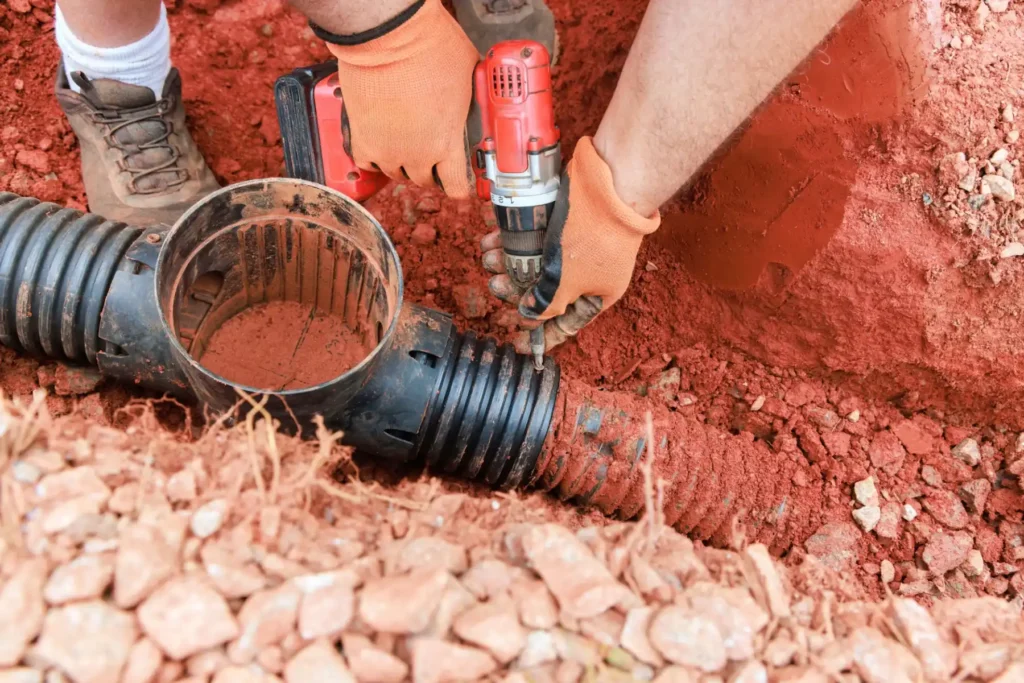
Our Side Sewer Repair Methods
We do not believe in tearing up your entire yard if we do not have to. Grindstone Guys utilizes high-definition camera diagnostics to pinpoint the exact location of the damage and recommend the most effective, least invasive repair method.
| Feature | Trenchless Pipe Lining (CIPP) | Traditional Spot Repair |
| How It Works | Inserts a flexible, epoxy-saturated tube into the old pipe. It inflates and cures, creating a brand-new, seamless “pipe within a pipe.” | Digs a targeted hole over the exact point of failure to physically cut out and replace the severely damaged section of pipe. |
| Best Used For | Cracked clay pipes, minor root intrusions, and repairs located under expensive driveways, mature trees, or patios. | Localized bellies (sags), severe collapses, or totally disconnected joints where a flexible liner cannot physically pass through. |
| Property Disruption | Minimal. Typically requires only one small access pit (often at the existing cleanout). | Moderate. Requires excavating a specific hole in the yard, sidewalk, or street above the break. |
| Lifespan | 50+ Years. The seamless epoxy is impenetrable to tree roots. | 50+ Years. New PVC or HDPE sections are permanently fused or clamped. |
The Grindstone Guys Advantage
Working on side sewers in the Puget Sound region requires specific municipal licensing and expertise. As a highly trained contractor, Grindstone Guys is fully equipped to handle complex right-of-way repairs. If your broken pipe sits under a Seattle or Tacoma city street, we manage the complex traffic control plans, street-use permits, and asphalt restoration required by local municipalities, taking the administrative burden completely off your shoulders.
Frequently Asked Questions
What exactly is a side sewer?
The side sewer (sometimes called a sewer lateral) is the specific length of pipe that carries wastewater from your home's foundation out to the public sewer main, which is typically located under the center of the street or in an alleyway.
Am I responsible for the section of the side sewer under the public street?
Yes. In Seattle, Tacoma, and most surrounding municipalities in King and Pierce counties, the property owner is legally and financially responsible for the entire length of the side sewer line, from the house connection all the way to the "wye" connection at the city main.
Do I need a permit to repair my side sewer?
Absolutely. Any structural repair or alteration to a side sewer requires a permit and an inspection from your local municipality (e.g., Seattle Department of Construction and Inspections or Pierce County Planning and Public Works). If the repair extends into the street, additional Right-of-Way permits are required. We handle all of this permitting for you.
How do tree roots keep getting into my sewer line?
Older homes in the area often have side sewers made of clay or concrete. These pipes were laid in short sections and sealed with mortar. Over decades, ground shifts crack the mortar, releasing moisture vapor into the soil. Tree roots seek out this moisture, forcing their way into the joints and eventually shattering the pipe as they grow.
Does homeowners insurance cover side sewer repair?
Standard homeowners insurance policies typically exclude wear-and-tear failures of the underground pipe itself. However, they may cover the water damage cleanup inside your home caused by the backup. Some homeowners carry an optional "Service Line Endorsement" rider, which does help cover the excavation and repair costs. We recommend checking your specific policy limits.
Will you have to tear up my driveway to fix the pipe?
Not necessarily. If the structural integrity of the pipe is still generally intact (no massive collapses or bellies), we can use CIPP (Cured-In-Place Pipe) trenchless lining. This allows us to seal and rebuild the pipe from the inside out, completely bypassing the need to jackhammer your driveway or ruin your landscaping.
How long does a side sewer repair take?
Most localized spot repairs or trenchless CIPP lining jobs can be completed by our crews in a single day. If the repair involves digging into a busy arterial street with complex traffic control requirements, the project may span 2 to 3 days to accommodate city inspections and final asphalt paving.