
Sewer Camera Inspection
Precision Sewer Camera Inspection in Seattle, King & Pierce Counties
Stop guessing what is blocking your pipes. When a main sewer line backs up, blindly running a mechanical snake down the drain only provides a temporary fix if the underlying pipe is broken, collapsed, or choked with tree roots. Grindstone Guys uses high-resolution sewer camera inspections to accurately diagnose the exact cause and location of plumbing failures across Seattle, King County, and Pierce County.
Our non-destructive video technology allows us to see inside your underground pipes in real-time, ensuring we fix the actual problem rather than just treating the symptoms.
When to Request a Sewer Camera Inspection
Because your main sewer line is buried underground, visual confirmation is the only way to know its true condition. We highly recommend a professional camera inspection if you are dealing with:
Buying an Older Home
In the Seattle and Tacoma areas, homes built before 1980 often have original clay, cast iron, or Orangeburg sewer lines. A pre-purchase camera inspection prevents you from inheriting a $15,000 plumbing disaster.Frequent Sewer Backups
If water backs up into your bathtub every time you run the washing machine, a structural blockage exists in the main line that standard plunging will not fix.Lush or Soggy Patches in the Yard
A cracked pipe leaks nutrient-dense wastewater into the soil, causing isolated patches of grass to grow unusually fast and green.Persistent Foul Odors
The smell of raw sewage inside or outside your home indicates a break in the line where sewer gases are escaping.- Before a Major Remodel
Before adding a new bathroom or heavily increasing your household’s water usage, verify that the existing underground plumbing can handle the increased volume.
How Our Video Inspection Process Works
Our licensed technicians bring commercial-grade diagnostic equipment directly to your property to provide absolute clarity.
Step 1
Access the Line
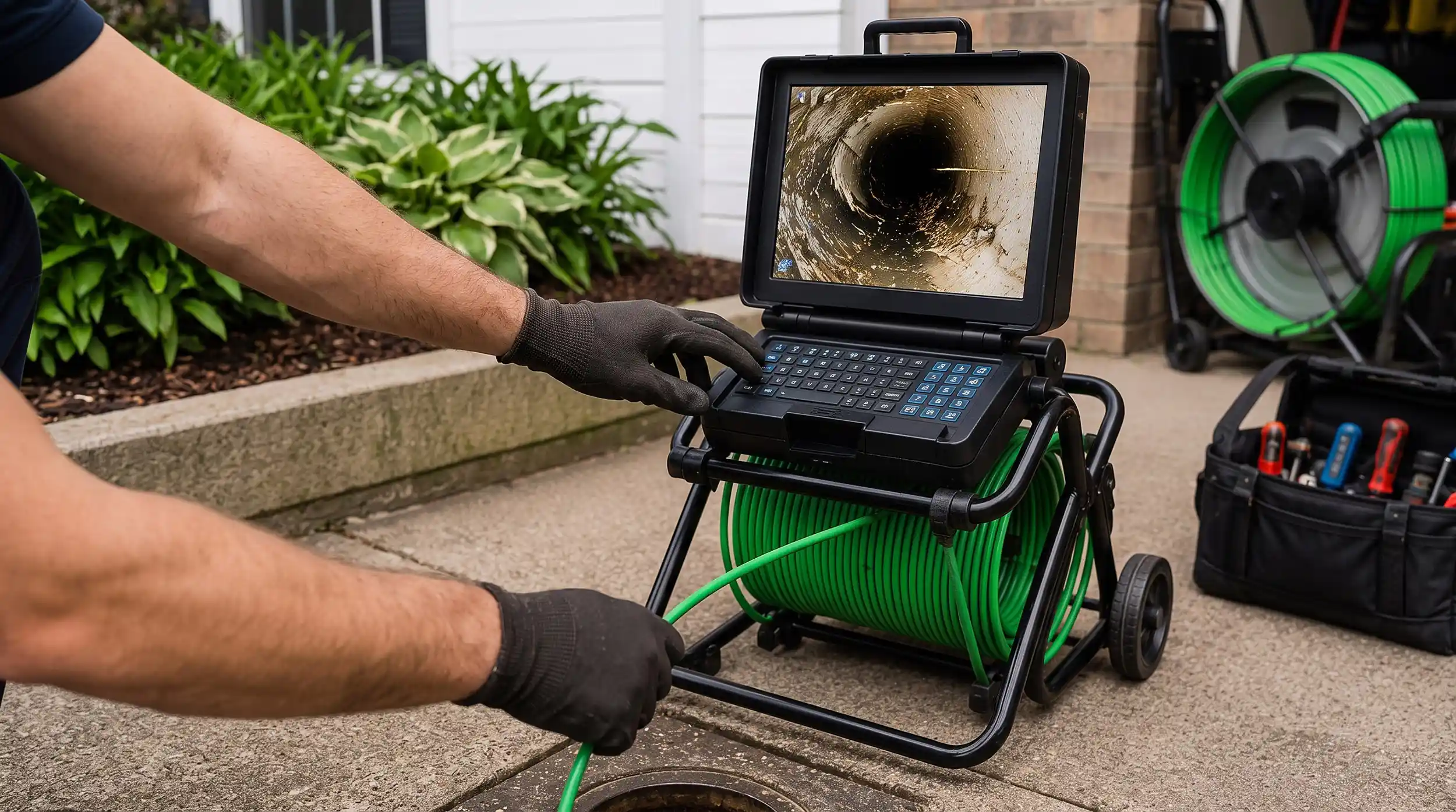
We locate the main cleanout (usually in the basement, crawlspace, or yard) and insert a flexible, waterproof fiber-optic cable equipped with a high-definition camera and powerful LED lights.
Step 2
Real-Time Navigation
We push the camera through the entire length of the side sewer line, from the house to the city main. You can watch the live feed on our monitor as we inspect the pipe walls for cracks, bellies, and root intrusions.
Step 3
Pinpoint Location
The camera head emits a radio frequency. If we find a collapsed section of pipe, we use a surface receiver to mark the exact depth and location in your yard, eliminating the need to dig exploratory trenches.
Step 4
Digital Reporting
We provide a clear explanation of what we found, a flat-rate estimate for any necessary repairs, and a digital copy of the video footage for your records.
Blind Snaking vs. Video Camera Inspection
Many homeowners assume a standard drain snake is the answer to every clog. Here is why a camera inspection is critical for recurring issues:
| Feature | Blind Snaking (Cable Auger) | HD Camera Inspection |
| Primary Purpose | Punches a hole through a soft blockage to temporarily restore water flow. | Visually diagnoses the structural integrity of the pipe and the exact nature of the blockage. |
| Effect on Tree Roots | Tears through some roots, leaving the rest to grow back quickly. | Identifies the exact entry point of the roots, allowing for a permanent trenchless repair. |
| Detecting Pipe Collapses | Cannot identify a collapsed pipe. The cable will just hit a hard stop and get stuck. | Visually confirms if the pipe has collapsed, flattened, or disconnected at the joints. |
| Locating the Problem | Provides a rough estimate based on how much cable was used. | Pinpoints the exact location and depth above ground using an integrated radio transmitter. |
Why Choose Grindstone Guys for Diagnostics?
We believe in absolute transparency. We do not use high-pressure sales tactics or guess at what your plumbing needs. Grindstone Guys provides the visual proof you need to make an informed decision about your home. By precisely locating the damage, we can often recommend minimally invasive trenchless repairs (like CIPP pipe lining) instead of tearing up your entire driveway or landscaping.
Frequently Asked Questions
How much does a sewer camera inspection cost?
The cost typically depends on the accessibility of your cleanout and the length of the sewer line. However, the cost of an inspection is minimal compared to buying a home with a collapsed sewer line or paying for continuous emergency snaking. Contact us for a flat-rate upfront quote.
Can the camera see through thick grease or mud?
No. If the pipe is 100% full of standing water, thick sludge, or mud due to a massive blockage, the camera lens will be submerged and cannot see the pipe walls. In these cases, we must first hydro-jet or auger the line to clear the standing water before we can inspect the structural integrity of the pipe.
Do you provide a copy of the video for my realtor or insurance?
Yes. Whether you are in the middle of a real estate transaction, dealing with an insurance claim, or just want the footage for your personal records, we provide a digital copy of the complete camera inspection.
How long does a sewer inspection take?
Most standard residential camera inspections in King and Pierce counties take between 45 minutes to 1.5 hours, depending on how easy it is to locate and access the main cleanout.
Can a camera inspection find a leak under my concrete slab?
Yes. If you have a suspected leak under the foundation of your home, sending a camera down the branch lines can visually confirm if a cast iron or PVC pipe has cracked beneath the concrete, allowing us to pinpoint the exact location before any jackhammering begins.
Will the camera fix the clog?
No. The camera is purely a diagnostic tool—it does not have cutting heads or water jets. Once the camera identifies what is causing the blockage (grease, roots, scale, or a collapse), we will use the appropriate tool (like a hydro jetter or trenchless liner) to actually fix the problem.
Does the city require a camera inspection?
While the city typically does not mandate a camera inspection for a standard home sale, many local municipalities in Washington state do require a camera inspection to verify that a newly repaired or replaced sewer line meets strict municipal codes before they sign off on the final plumbing permit.