
Septic to Sewer Conversion
Comprehensive Septic to Sewer Conversion in Seattle, King & Pierce Counties
An aging septic system is a ticking financial time bomb. For decades, many homes in the greater Puget Sound region relied on private septic tanks. Today, as urban growth expands and local health departments crack down on groundwater contamination, maintaining a septic system is becoming increasingly expensive and heavily regulated. When your leach field fails or the city extends a municipal sewer main down your street, converting to the public sewer system is the most secure, permanent solution for your property.
Grindstone Guys provides turnkey septic-to-sewer conversion services for homeowners across Seattle, King County, and Pierce County. We handle the heavy excavation, the complex municipal permitting, and the safe decommissioning of your old tank.
The Burden of an Aging Septic System
In the damp climate of the Pacific Northwest, septic systems are particularly vulnerable to failure. Heavy local rainfall frequently saturates the soil, causing leach fields to flood and driving raw sewage back into your home. It is time to consider a conversion if:
Your Drain Field is Failing
If you notice unusually lush, swampy patches of grass in your yard or smell raw sewage, your drain field has stopped processing wastewater.The City is Mandating Connection
Many local municipalities in King and Pierce counties legally require homeowners to connect to the public sewer if a city main is located within a certain distance of the property line (often 200 to 300 feet).Frequent, Expensive Pumping
If you are paying a vacuum truck to pump out your tank multiple times a year just to keep your toilets flushing, the system has lost its natural bacterial balance.You Are Selling Your Home
A failing or unpermitted septic system will instantly derail a real estate transaction. Buyers strongly prefer the reliability of a municipal sewer connection.
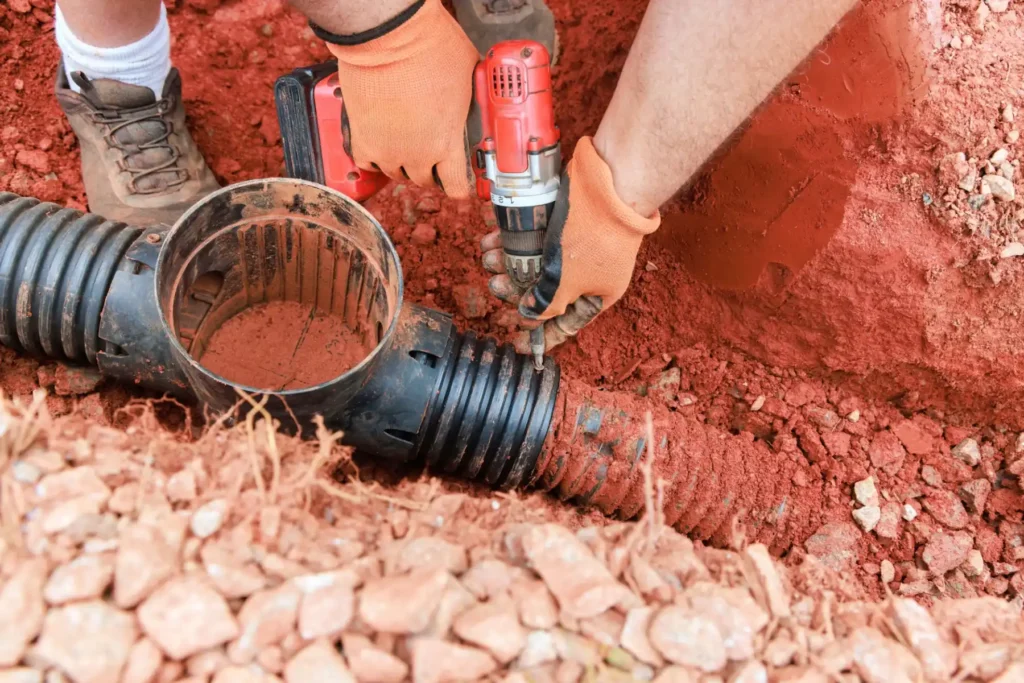
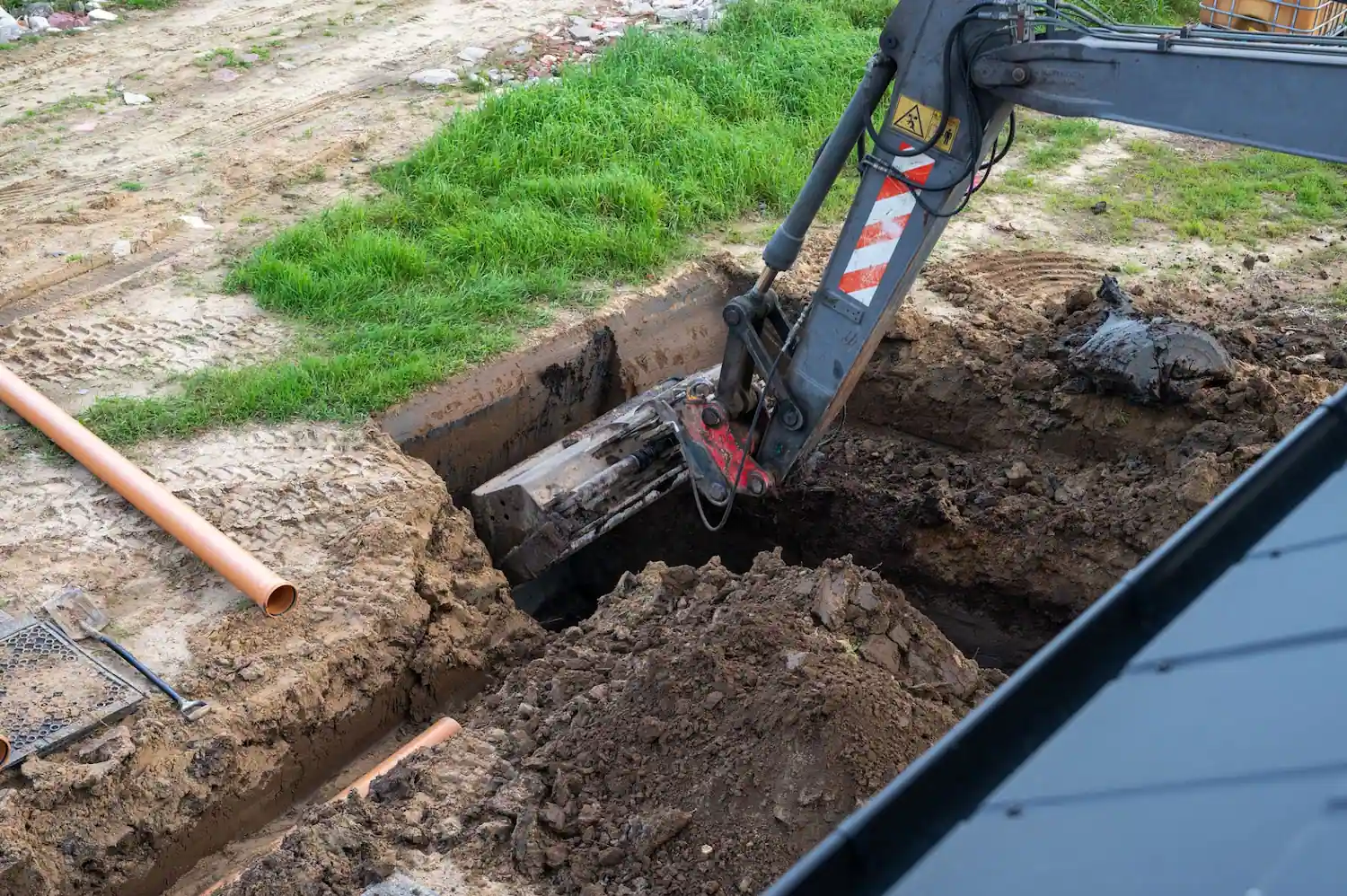
Our Septic to Sewer Conversion Process
Connecting a private home to the city sewer is a major civil engineering project that requires right-of-way access, heavy machinery, and strict code compliance. We manage the entire transition from start to finish:
Step 1
Engineering & Permitting
We draft the routing plans and secure all necessary side sewer and street-use permits from your local utility district (e.g., Seattle Public Utilities, Pierce County Sewers).
Step 2
Safe Septic Decommissioning
Washington State law dictates how an old septic tank must be retired. We coordinate the final pumping of the tank, crush the top lid, and fill the massive underground void with compacted sand or gravel to prevent future sinkholes in your yard.
Step 3
Trenching & Pipe Installation
We excavate a precise trench from your home’s foundation out to the street. We lay high-grade PVC or HDPE piping, ensuring the exact downward slope required for gravity to transport your wastewater.
Step 4
The City Connection (The Wye)
We core into the massive municipal sewer main beneath the street and install a secure, watertight connection.
Step 5
Inspection & Backfill
Once the city inspector signs off on the integrity of the new line, we carefully backfill the trenches, compact the soil, and restore the street asphalt to code.
Private Septic vs. Public Sewer: The Reality
| Feature | Private Septic System | Municipal Sewer System |
| Maintenance Cost | High. Requires pumping every 3-5 years, strict monitoring of household chemicals, and eventual drain field replacement ($15,000+). | Low. You pay a predictable monthly utility bill to the city; the municipality handles all downstream treatment. |
| Property Impact | The drain field restricts how you use your yard. You cannot build a patio, park a car, or plant large trees over the tank or leach lines. | Zero restrictions. Once the underground pipe is laid, your yard is entirely yours to develop or landscape as you see fit. |
| Failure Risk | High in the PNW. Heavy rains saturate the soil, leading to immediate household backups. | Very Low. Municipal systems are designed to handle massive capacity regardless of local weather conditions. |
| Home Value | Often viewed as a liability by modern buyers, complicating home inspections and financing. | Increases property value and streamlines the selling process. |
Why Choose Grindstone Guys for Your Conversion?
Converting to a public sewer involves tearing into city streets and navigating complex local bureaucracy. A standard residential plumber does not have the heavy equipment or the liability insurance to perform this work safely. Grindstone Guys specializes in heavy excavation and right-of-way utility connections. We provide transparent, flat-rate pricing that encompasses the digging, the pipe laying, the tank decommissioning, and the final street paving, ensuring you are never hit with surprise fees midway through the project.
Frequently Asked Questions
Is it legally mandatory for me to connect to the city sewer?
In many cases, yes. If your current septic system fails and a public sewer main is located within 200 to 300 feet of your property line, local health departments in King and Pierce counties will often deny a permit to repair the septic system and legally mandate that you connect to the city sewer instead.
What happens to my old septic tank after the conversion?
By law, an abandoned septic tank cannot just be left hollow underground, as it will eventually rust, collapse, and create a dangerous sinkhole. We pump out the remaining waste, break down the top and bottom of the tank to allow for drainage, and fill the entire cavity with clean, compacted gravel or sand.
Do I have to pay a connection fee to the city?
Yes. In addition to our labor and materials for laying the pipe, the local municipality will charge a "Capacity Charge" or "Connection Fee" to buy into the public infrastructure. This fee varies widely depending on your specific utility district. We will help you identify these exact municipal costs during our initial consultation.
Will my yard be completely destroyed during the conversion?
Because we have to run a pipe from your house to the street and fill a massive underground tank, significant digging is required. We are highly strategic about where we route the trenches to minimize the footprint, but you should expect to reseed grass or repair hardscaping over the trench lines once the project is finished and the soil has settled.
How long does the entire septic to sewer conversion take?
The physical digging and pipe installation typically takes 3 to 5 days. However, the municipal permitting process—especially securing right-of-way permits to dig in a public street—can take several weeks before we are allowed to break ground.
What is a sewer grinder pump, and will I need one?
Sewer systems rely on gravity. If your house sits geographically lower than the city sewer main in the street, gravity cannot push your wastewater uphill. In this scenario, we must install a dedicated grinder pump station in your yard that macerates the waste and pumps it up into the municipal line under pressure.
Can I keep using my plumbing while the work is being done?
For the vast majority of the project, yes. You can stay in your home and use your water normally while we dig the trenches and lay the new pipe outside. We only need to shut off your plumbing for a few hours on the final day when we physically sever the connection to the old septic tank and tie your home's plumbing into the new sewer line.