
CIPP Pipe Lining
Advanced CIPP Pipe Lining in Seattle, King & Pierce Counties
Fix your broken sewer line without destroying your property. In the past, repairing a cracked underground pipe meant bringing in heavy excavators to tear up your driveway, uproot your mature trees, and destroy your landscaping. Today, Grindstone Guys utilizes Cured-In-Place Pipe (CIPP) lining—a highly advanced trenchless technology that allows us to build a brand-new, structural pipe directly inside your old, failing one.
We provide precision CIPP lining for residential and commercial properties across Seattle, King County, and Pierce County, saving you thousands of dollars in property restoration costs.
What is CIPP (Cured-In-Place Pipe) Lining?
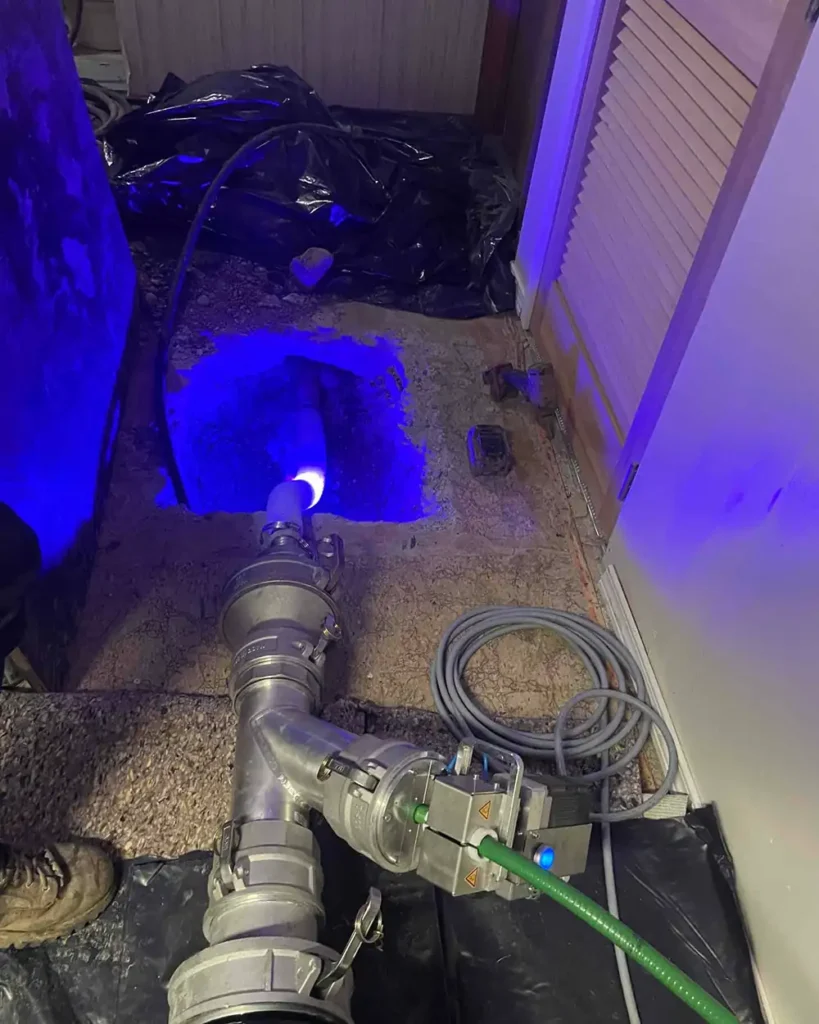
CIPP is a minimally invasive method of rehabilitating cracked, leaking, or root-infested sewer and drain lines. Instead of digging a massive trench to remove the old pipe, we utilize your home’s existing plumbing cleanout as an access point.
We insert a flexible, felt-like tube saturated with a high-strength epoxy resin into the damaged pipe. Using air or water pressure, we inflate the tube so it presses tight against the inner walls of the old pipe. Once the epoxy cures and hardens (usually in just a few hours), it creates a seamless, jointless “pipe within a pipe” that is structurally stronger than the original.
When is CIPP the Right Solution?
Trenchless lining is the ideal solution for aging infrastructure in the Pacific Northwest, specifically when the pipe is structurally sound but suffering from age-related degradation. CIPP is highly effective for:
Severe Tree Root Intrusions
Because the new epoxy liner has zero joints or seams, it is 100% impenetrable to tree roots seeking moisture.
Cracked Clay or Cast Iron Pipes
If your home was built before 1980, aging cast iron channels and clay joints are likely leaking. The liner completely seals these cracks, stopping ground moisture from entering and wastewater from escaping.
Pipes Under Expensive Hardscaping
If your side sewer runs directly under your newly poured concrete driveway, a custom patio, or a city sidewalk, CIPP allows us to bypass the concrete entirely, saving you massive restoration fees.
Pinholes and Corrosion
The epoxy resin stops internal corrosion in its tracks, providing a smooth surface that drastically improves wastewater flow.
The Grindstone Guys Pipe Lining Process Our trenchless repair system requires absolute precision and rigo
Our trenchless repair system requires absolute precision and rigorous preparation.
Step 1
HD Camera Inspection
We send a high-definition camera down the line to assess the damage and confirm the pipe qualifies for a liner (the pipe cannot be completely crushed or collapsed).
Step 2
High-Pressure Descaling
A liner will only adhere to a clean pipe. We use heavy-duty hydro jetting and mechanical descaling chains to scrape away years of rust, calcification, and tree roots, restoring the pipe to its original diameter.
Step 3
Resin Saturation (Wet-Out)
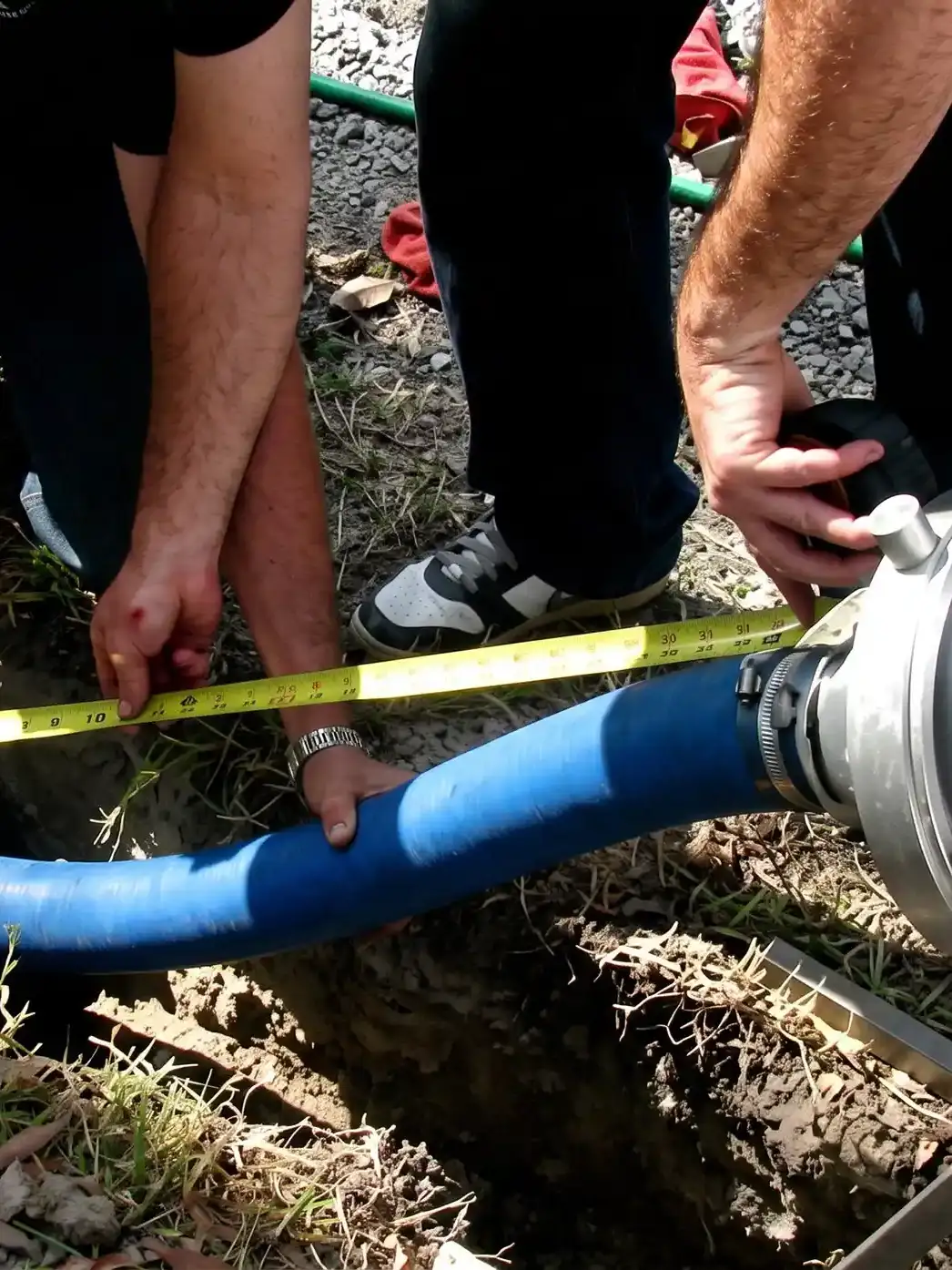
We custom-measure a specialized felt liner and saturate it completely with a two-part epoxy resin on-site.
Step 4
Inversion & Curing
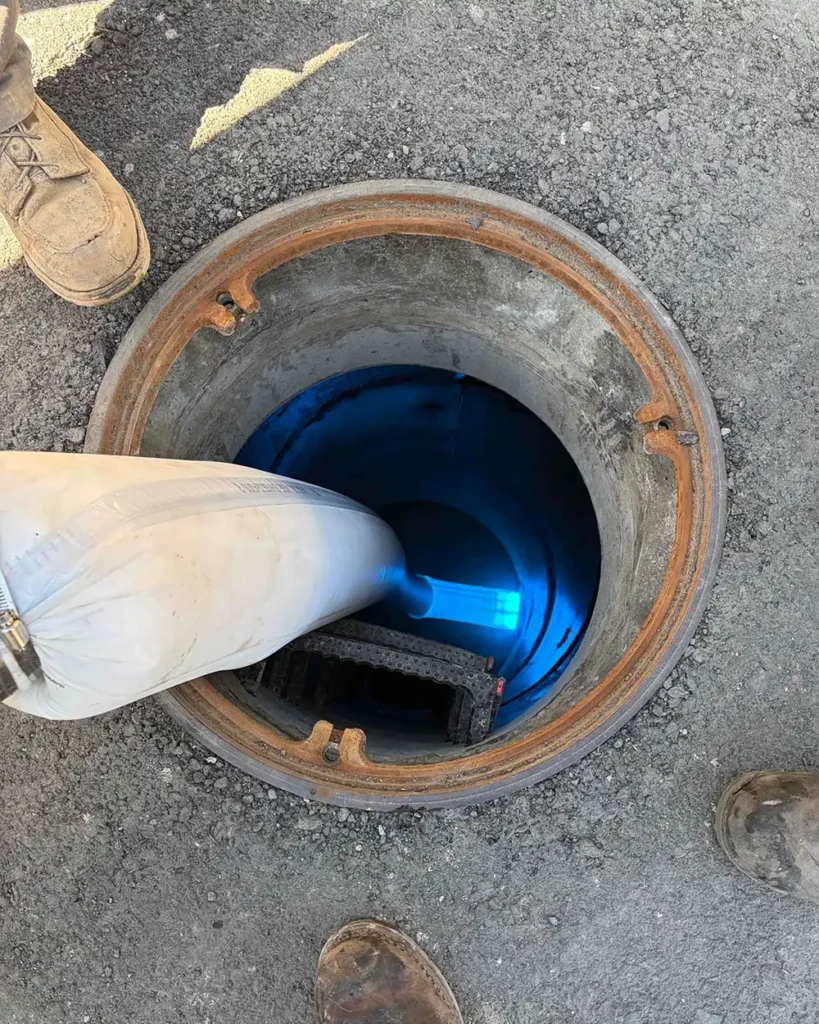
The liner is inverted (turned inside out) directly into the pipe using air pressure, pressing the wet resin firmly against the old pipe walls. We hold it under pressure while it cures into a rock-hard structural pipe.
Step 5
Final Video Verification
We perform a final camera inspection, providing you with video proof of your smooth, brand-new underground sewer line.
Trenchless CIPP vs. Traditional Excavation
| Feature | CIPP Trenchless Lining | Traditional Open-Trench |
| Property Disruption | Minimal. Usually requires only one small access point. | Massive. Requires a deep trench spanning the entire length of the pipe. |
| Project Timeline | Usually completed in a single day. | Takes 3 to 5 days, plus weeks of waiting for landscaping to recover. |
| Landscape Restoration Costs | Virtually zero. Your driveway and yard remain intact. | High. You are responsible for repaving concrete, reseeding lawns, and replacing plants. |
| Root Resistance | 100% impenetrable. Seamless epoxy has no joints for roots to exploit. | High. Modern PVC has glued joints, but any installation error can attract future roots. |
| Best Used For | Cracked, leaking, or root-choked pipes that still maintain their general shape and slope. | Severely collapsed pipes, “bellies” (sags) holding standing water, or crushed Orangeburg pipe. |
Why Choose Grindstone Guys for Trenchless Repairs?
CIPP lining is an exact science that requires specialized training, temperature control, and a deep understanding of epoxy curing times. If a liner is installed incorrectly, it can harden prematurely and ruin the existing pipe. Grindstone Guys brings certified trenchless technicians to every job in King and Pierce counties. We do not cut corners on the cleaning phase, ensuring your new liner bonds perfectly and lasts for decades.
Frequently Asked Questions
How long does a CIPP epoxy liner last?
When installed correctly, a CIPP liner is incredibly durable. Manufacturers rate the structural lifespan of the cured epoxy resin at 50+ years, making it a permanent solution for your property.
Does installing a liner reduce the diameter of my sewer pipe?
Technically, yes, the liner takes up about a quarter-inch of space inside the pipe. However, because the cured epoxy is incredibly smooth and removes all the friction caused by rust and offset joints in the old pipe, the actual flow rate (capacity) of your sewer line almost always increases.
Can you use CIPP to line an Orangeburg pipe?
In most cases, no. Orangeburg pipe (compressed tar paper used from the 1940s to 1970s) typically fails by squashing flat under the weight of the dirt. Because a liner takes the shape of the host pipe, lining a squashed pipe just gives you a hardened squashed pipe. Orangeburg requires a full replacement or pipe bursting.
How long does the epoxy take to cure?
Depending on the ambient temperature, ground conditions, and the specific resin formula we use, the curing process typically takes between 2 to 4 hours. We can often complete the entire cleaning, lining, and curing process in a single day.
Will my water be shut off all day?
You will not be able to use your plumbing (sinks, toilets, showers) during the few hours the liner is actively curing, as introducing water will ruin the resin. We clearly communicate this timeline so you can plan your day accordingly.
Can CIPP fix a "belly" or sag in my sewer line?
No. CIPP creates a rigid pipe that perfectly conforms to the shape of the existing pipe. If your pipe has settled into a "belly" that holds standing water, the new lined pipe will have the exact same sag. Sagging pipes must be physically excavated and re-graded to restore gravity flow.
Is a trenchless liner safe for the environment?
Yes. CIPP lining is actually considered an eco-friendly plumbing solution. By repairing the pipe from the inside, we prevent raw sewage from leaching into the local King and Pierce County groundwater, and we avoid the heavy carbon footprint associated with running massive diesel excavators and dump trucks for days.